
Enterprise data silos: why do companies enter the same data multiple times?
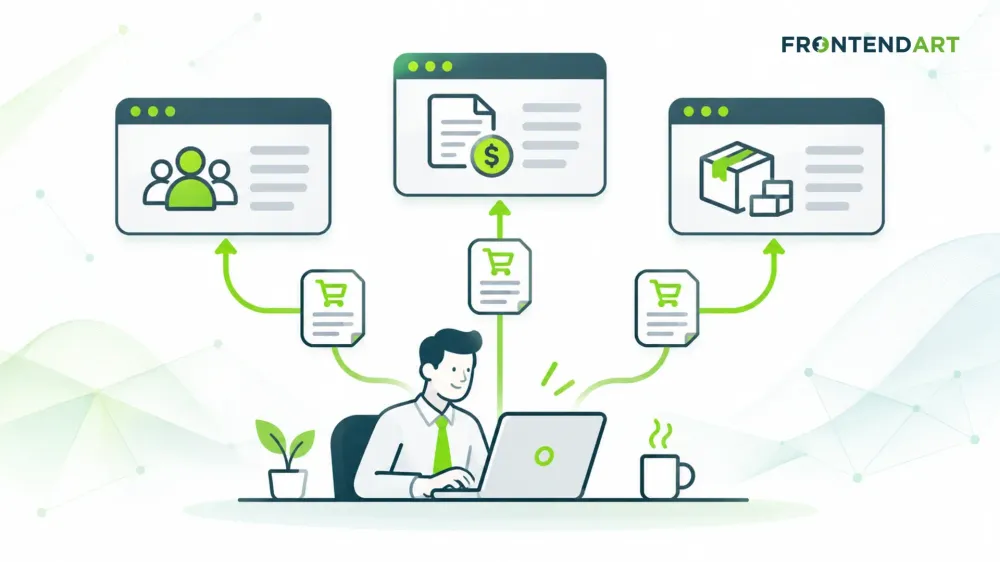
Ismerős jelenet: beérkezik egy megrendelés, és mire a CRM-ből a számlázóba, majd a raktárkészlet-nyilvántartásba jut, ugyanazt az adatot már háromszor gépelte be valaki. A cégek többsége külön-külön jó döntéseket hozott az egyes rendszerek bevezetésekor, mégis egy olyan működésben találja magát, amely észrevétlenül viszi az időt és a pontosságot. Vajon miért marad fenn ez a gyakorlat évek után is, és mibe kerül valójában a vállalatnak? Azt vizsgáljuk, hogy a megoldás tényleg új szoftver-e, vagy van ennél célzottabb és gazdaságosabb út.
A customer places an order. The sales representative enters it into the CRM system, the finance team transfers the information to the invoicing software, and the warehouse records it separately in the inventory management system. The same data, entered into three different applications, taking up the time of three employees. For many companies, this is a perfectly normal way of working. The problem is not that they use too many software solutions, but that these solutions do not communicate with one another.
When digitalisation creates more work
Companies typically introduce IT systems gradually. First comes invoicing software, followed by a CRM system and eventually an inventory management or enterprise resource planning solution. Each addresses a specific business problem, but over the years, isolated systems can begin to emerge.
In such environments, transferring information between applications often remains the responsibility of employees. Copying, verifying and correcting data takes time away from activities that create real business value. One of the key objectives of custom software development is to ensure that separate systems work together in an integrated way, aligned with the company's actual business processes.
The hidden risks of manual data transfer: inaccurate and inconsistent data
Manual data transfer is not only time-consuming but also creates opportunities for errors. A single incorrectly entered product code or outdated customer record can lead to inconsistencies across different systems.
What makes this particularly challenging is that the problem often goes unnoticed until the incorrect data appears on an invoice, in an inventory statement or in a management report. This is why enterprise software development is not simply about creating new features, but also about carefully designing data flows and connections between systems.
New software is not always the answer
In many cases, the solution is not to replace existing systems but to connect them. With proper integration, order information can be automatically transferred between the relevant applications, eliminating duplicate data entry and reducing the likelihood of errors.
Software tailored to business processes and integration solutions enable different applications to work together as a unified system. This allows companies to retain their existing software while automating data flows and coordinating previously disconnected processes.
However, this requires clearly defining which system is responsible for managing specific data, how synchronisation takes place and how potential discrepancies are resolved. Consistent, reliable data also forms the foundation of data-driven IT decision-making, as management reports are only as accurate as the information behind them.
True automation begins where repetitive work ends
In a well-functioning digital environment, employees should not be responsible for bridging the gaps between systems. Information is captured where it is needed and then automatically shared with other relevant applications according to predefined rules. This reduces manual workloads, speeds up business processes and improves operational transparency.
Ultimately, the true measure of successful digitalisation is not whether there is a software solution for every task, but whether employees no longer have to do the same work more than once.